How to Choose the Right Employee Meal Plan for a 20–50 Employee Company
For a small and growing company, employee meals may seem like a simple benefit—but the right meal plan can improve employee experience, save time, and support a healthier and more productive workplace.
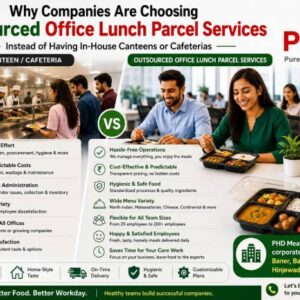
For HR, founders and Admin teams, the challenge is to find a meal solution that is practical, affordable, hygienic and easy to manage without the cost and complexity of setting up an in-house cafeteria.
Why Employee Meals Matter
Many employees in small companies are bachelors, live in PGs or shared accommodation, or have limited facilities and time for cooking. As a result, they often depend on restaurants, food delivery apps or irregular meals.
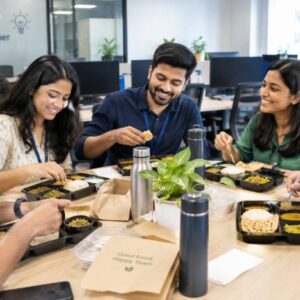
A reliable office meal service can solve this everyday problem by giving employees access to a fresh, balanced and home-style meal during working hours.
The benefit is simple: employees spend less time worrying about their next meal and can stay focused on their work.
What Should HR Look for in a Meal Plan?
A good corporate meal plan should meet five basic requirements:
- Quality & Hygiene
Food should be prepared with fresh ingredients in a clean and hygienic kitchen, with proper food-handling and safety practices.
- Taste & Menu Variety
Employees should not feel they are eating the same meal every day. A rotating menu with familiar Indian favourites and occasional variety helps maintain participation.
- Consistent Delivery
Meals need to arrive at the agreed time, properly packed and ready to eat. Consistency is particularly important for offices with fixed lunch breaks.
- Flexible Pricing
For a 20–50 employee company, there is no need to commit to an expensive cafeteria arrangement. Employee subscription, company subsidy or shared-payment models can all work.
- Easy Administration
The HR/Admin team should not have to spend significant time managing daily food operations. Ordering, billing, attendance and delivery should remain simple.
A Practical Model for a 20–50 Employee Office
Suppose a company has 30 employees, with around 20 employees opting for lunch.
At ₹100 per meal:
20 employees × ₹100 × 22 working days = ₹44,000 per month
The company can choose from different approaches:
- Company-sponsored: Company pays the full cost.
- Partially subsidised: Company contributes a fixed amount and employees pay the balance.
- Employee subscription: Employees pay directly for their meals.
- Shared model: Company and employees jointly contribute.
This allows even a small company to introduce a meal benefit without investing in a cafeteria, kitchen or additional food-service infrastructure.
Simple ROI Beyond the Food Cost
The value of an employee meal plan is not limited to the price of food.
Consider 30 employees spending just 10 minutes each workday arranging, ordering or collecting lunch.
That represents approximately:
30 × 10 minutes × 22 days = 110 employee-hours per month
Not all of this time will translate directly into additional productivity. However, reducing everyday food-related interruptions can improve convenience, employee experience and workplace continuity.
For a small company, these practical benefits can make a well-managed meal program worthwhile.
Mini Case Study: 35-Employee Technology Company
A Pune-based technology company with 35 employees wanted to provide a reliable lunch option but did not have enough space or scale to justify an in-house cafeteria.
The company started with approximately 20 regular meal subscribers.
The selected service provided:
- Home-style Indian meals
- Rotating weekly menu
- Hygienic preparation
- Fixed lunch-time delivery
- Leak-proof professional packaging
- Option for specific dietary requirements
Instead of creating a complicated cafeteria arrangement, the company introduced a simple meal subscription that employees could use every working day.
The lesson: A small company does not need a large cafeteria setup to provide a meaningful employee meal benefit. A simple, dependable food service can be scaled according to actual demand.
A Quick HR Checklist
Before selecting a meal provider, ask:
✓ Is the food genuinely fresh and hygienically prepared?
✓ Is the menu varied enough for regular consumption?
✓ Can employees try the food before committing?
✓ Is delivery reliable during the office lunch window?
✓ Is pricing transparent and suitable for 20–50 employees?
✓ Can the service scale as the company grows?
✓ How much administration will HR/Admin need to handle?
Why PHD Meals?
PHD Meals is a Wakad, Pune-based homefood kitchen & canteen providing corporate lunch solutions, daily meal services and catering for small and growing teams.
Our focus is simple:
Pure Ingredients. Genuine Taste. Truly Home Food.
We prepare fresh, home-style meals using authentic ingredients, with a strong focus on hygiene, food safety and consistent quality.
Our menu includes North Indian, Maharashtrian, Chinese and Continental options, making it suitable for teams looking for everyday variety.
For companies in Wakad, Hinjewadi, Tathawade, Baner and Balewadi, PHD Meals can provide a flexible meal solution that can start with a small group and grow with the organisation.
Before You Commit, Taste It First
HR/Admin teams can start with a sample meal and evaluate:
- Taste
- Menu variety
- Portion size
- Packaging
- Delivery experience
- Overall value
Once the team is comfortable with the quality, the meal service can be introduced as a monthly employee meal plan.
A good employee meal plan doesn’t need to be complicated. It simply needs to be fresh, reliable, hygienic and easy for both employees and the company to use.